
Good Habits Every Child Should Learn Before Starting School
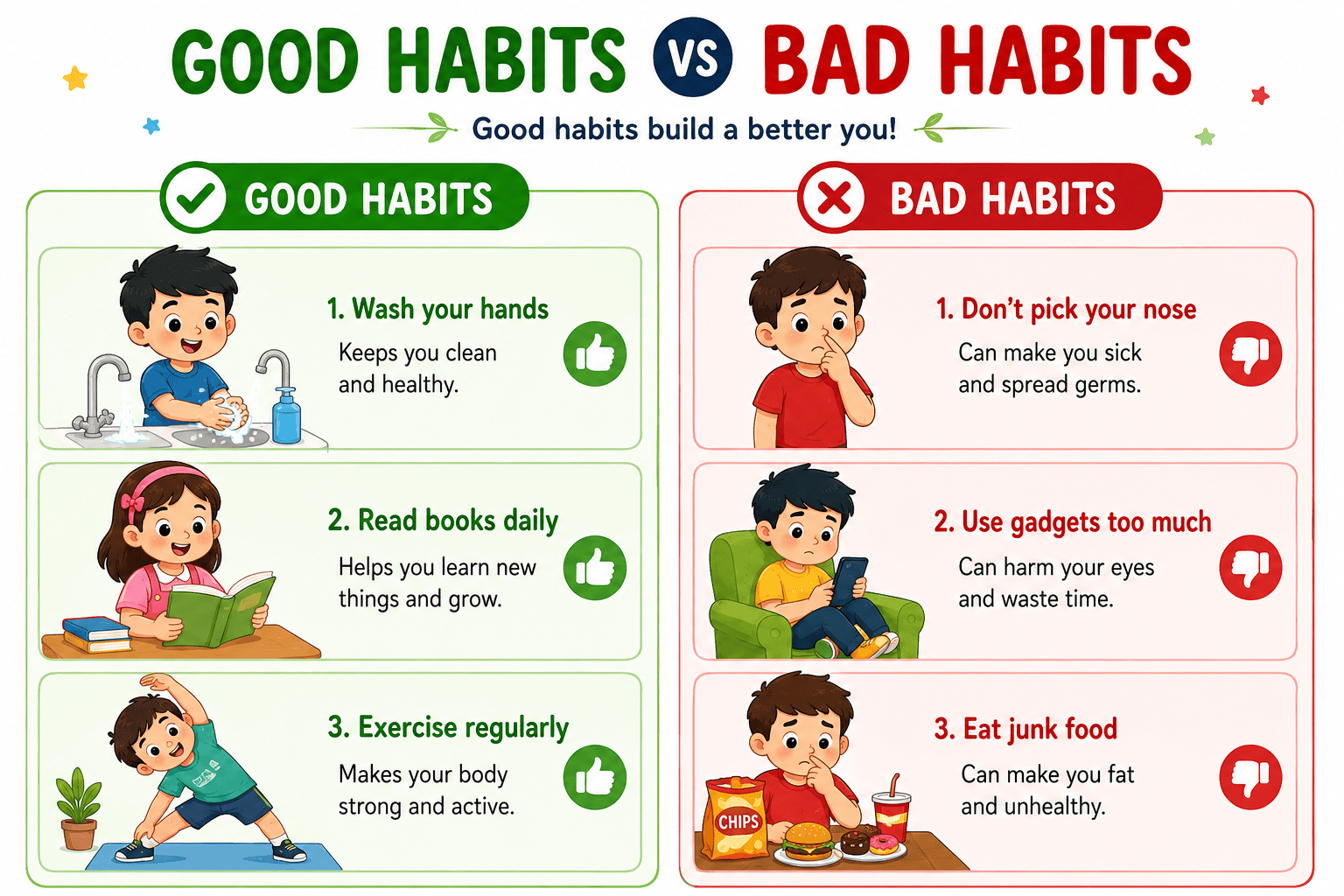
“Children are not born with good habits—they learn them every day through love, guidance, and practice.”
The first day of school is a special milestone for every child and every parent. As parents, we often focus on teaching our children the alphabet, numbers, and colours before they begin school. While these are helpful, the most important lessons are often the simplest ones—good habits.
Good habits help children become confident, independent, respectful, and ready to enjoy school life. The good news is that these habits do not require expensive toys or long study hours. They can be developed naturally through everyday family routines.
Here are some important habits that prepare children for a happy and successful start at school.
1. Greeting Others with Respect
Teaching children to greet teachers, elders, family members, and friends with a smile is one of the first social skills they learn.
Simple greetings like “Good Morning,” “Namaste,” “Thank You,” and “Please” help children become polite and confident.
Children who learn to communicate respectfully find it easier to make friends and build positive relationships.
2. Listening Carefully
A classroom is full of instructions, stories, songs, and conversations.
Children who learn to listen patiently are better able to understand, follow directions, and participate in activities.
Parents can develop this habit by reading stories together, asking simple questions, and encouraging children to wait until someone finishes speaking.
3. Sharing and Taking Turns
School is one of the first places where children learn to live and learn together.
Sharing toys, waiting patiently for their turn, and cooperating with classmates help children build friendships and develop kindness.
These experiences teach children that learning is not only about individual success but also about helping one another.
4. Keeping Things Neat and Organised
Children should gradually learn to:
- Keep toys back after playing.
- Place books in their school bag.
- Keep shoes in the proper place.
- Look after their belongings.
These small responsibilities build independence and discipline from an early age.
5. Washing Hands and Maintaining Cleanliness
Personal hygiene is an important life skill.
Children should be encouraged to:
- Wash hands before eating and after using the washroom.
- Use a handkerchief or tissue when needed.
- Keep their nails clean.
- Throw waste into a dustbin.
These habits protect children’s health and show respect for others.
6. Eating Healthy Food Independently
Parents should gradually encourage children to:
- Eat without excessive help.
- Finish their meals patiently.
- Drink enough water.
- Try different healthy foods.
Independent eating builds confidence and prepares children for school routines.
7. Speaking with Confidence
Children should feel comfortable expressing simple needs, such as:
- “May I drink water?”
- “May I use the washroom?”
- “I need help.”
They do not need perfect English before starting school. What matters is the confidence to communicate.
As they grow, schools help children develop strong communication skills in both English and Hindi.
8. Following a Daily Routine
A regular routine helps children feel secure and organised.
Parents can encourage:
- Sleeping on time.
- Waking up early.
- Eating meals at regular times.
- Setting aside time for play, reading, and rest.
Good routines make the transition to school much easier.
9. Caring for Others
Children learn kindness from the people around them.
Simple actions such as helping a friend, thanking someone, respecting elders, and showing care for animals and nature help build empathy and compassion.
These values are just as important as academic learning.
10. Developing a Love for Learning
Encourage your child to ask questions, observe nature, listen to stories, draw pictures, sing songs, and explore new ideas.
Children who enjoy learning become confident learners throughout their lives.
Remember, the goal is not to teach children everything before school. The goal is to make them excited about discovering new things every day.
What Parents Should Remember
Every child develops at their own pace.
Some children begin speaking early, while others take more time. Some enjoy books, while others learn through music, games, or activities.
Avoid comparing your child with others.
Celebrate every small achievement, encourage every new effort, and be patient with every mistake.
Confidence grows when children feel supported, not pressured.
How Schools and Parents Can Work Together
A child’s education is strongest when parents and teachers work as partners.
At [School Name], we believe that good habits are developed through consistent guidance at home and positive reinforcement at school. Our teachers encourage children to be respectful, responsible, curious, and confident through daily routines, activity-based learning, storytelling, group activities, and joyful classroom experiences.
Together, we can help children develop not only academic skills but also the character and values that will guide them throughout life.
Concluding Remarks
A child who knows how to smile, share, listen, care, and ask questions has already taken the first step towards success.
At Samfoun Academy], we welcome every child with love, patience, and encouragement. Our aim is to create a safe and joyful environment where children develop good habits, strong values, and a lifelong love for learning.
Admissions are open for Preprimar and Primary classes. We invite you to visit our campus and discover how we help every child build a strong foundation for a bright future.

Samfoun Academy provides value-based education through trust, integrity, and community service..